Seasonal care
Surviving Charleston pollen season without wrecking your paint
From the first yellow film in February to the last oak catkin in May, here is how to keep pollen off your finish without grinding it in.
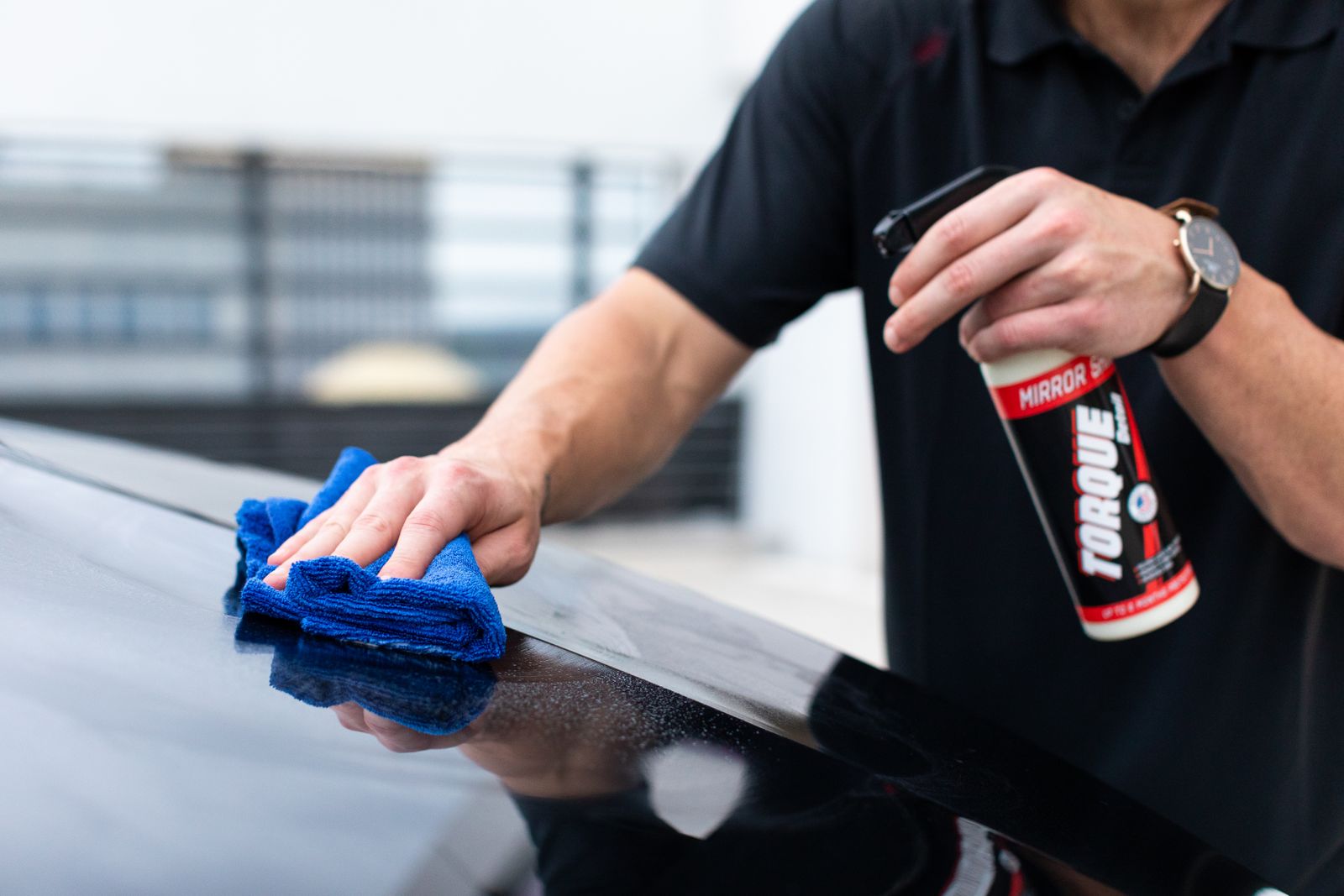
Every year around the second week of February, the live oaks on Rutledge Avenue start dropping catkins and the entire peninsula turns a shade of yellow-green. By the first week of March, a car parked outside overnight has a visible film on it. By April, the film is on the inside of the door jambs too.
Pollen season is the single most damaging stretch of the year for paint in the Lowcountry, and almost all of that damage is self-inflicted. It is not the pollen itself. It is what people do about it.
Why pollen is worse than ordinary dust
Oak pollen is not inert. The grains are slightly acidic and they hold moisture against the clear coat. On a hot panel, that combination can etch a faint outline into the finish within a few days, and etching is a correction job rather than a wash job.
It also gets everywhere. Pollen packs into panel gaps, around badges, into the weatherstripping and into the cowl vents under the windshield. A drive-through wash pushes most of it deeper rather than removing it.
The mistake almost everyone makes
The instinct is to grab a dry towel and wipe the car down. That is the worst possible response. Dry pollen is abrasive, and dragging a towel across it is functionally the same as taking fine sandpaper to your clear coat in long horizontal strokes.
The same applies to the brush at a coin-op bay, the feather duster sold at every parts store, and the squeegee at a gas station. If it touches dry paint, it is scratching it.
- Do not dry wipe, even with a clean microfiber
- Do not use the brush at a self-serve bay, ever
- Do not let pollen sit on a hot panel through a weekend
- Do not use dish soap, which strips whatever protection you have left
What actually works
Rinse first, always. A hose with a normal nozzle, working top down, will carry most of the loose pollen off the car before anything touches it. If you have a foam sprayer, even a cheap one, let the foam dwell for three or four minutes before you rinse.
Then wash with two buckets, one for your soap and one with clean water and a grit guard for rinsing the mitt. Work top down, one panel at a time, rinsing the mitt after every panel. The whole point is to keep the grit you just removed from going back onto the car.
Dry with a large plush towel by blotting, not dragging. If the panel is still wet, the towel glides. If it is dry, the towel drags whatever is left across the paint.
Protection makes pollen season easier
A sealant or a ceramic coating does not stop pollen from landing on the car, but it changes how it behaves once it does. On a slick, protected surface, pollen sits on top rather than bonding to it, and a rinse takes most of it away. On bare, oxidized clear coat, it clings.
That difference is why we do more coating installations in January and February than any other month. Customers who have been through one pollen season on bare paint tend not to want a second one.
The schedule we recommend
For a car parked outside on the peninsula, a hand wash every two weeks from February through May keeps the film from ever establishing itself. Our membership exists mostly because of these three months.
For a garage-kept car, once a month is usually enough, with a rinse after any stretch where you leave it outside overnight.
And once the catkins stop dropping, usually somewhere in the third week of May, book a full detail. A single-stage polish clears the light etching that accumulated over the season and gives you a clean starting point for summer. It is the rhythm most of our long-term customers have settled into, and it works.
Ready to act on any of this?
Book a hand wash